
The Amnesia Crisis: How an AI Forgot Its Own Name Tag
Scott said Option B. The AI acknowledged Option B. Then it asked what Option B was. The context window had eaten the email signature alive.
 Scott A. Monett
7 min read
Scott A. Monett
7 min read
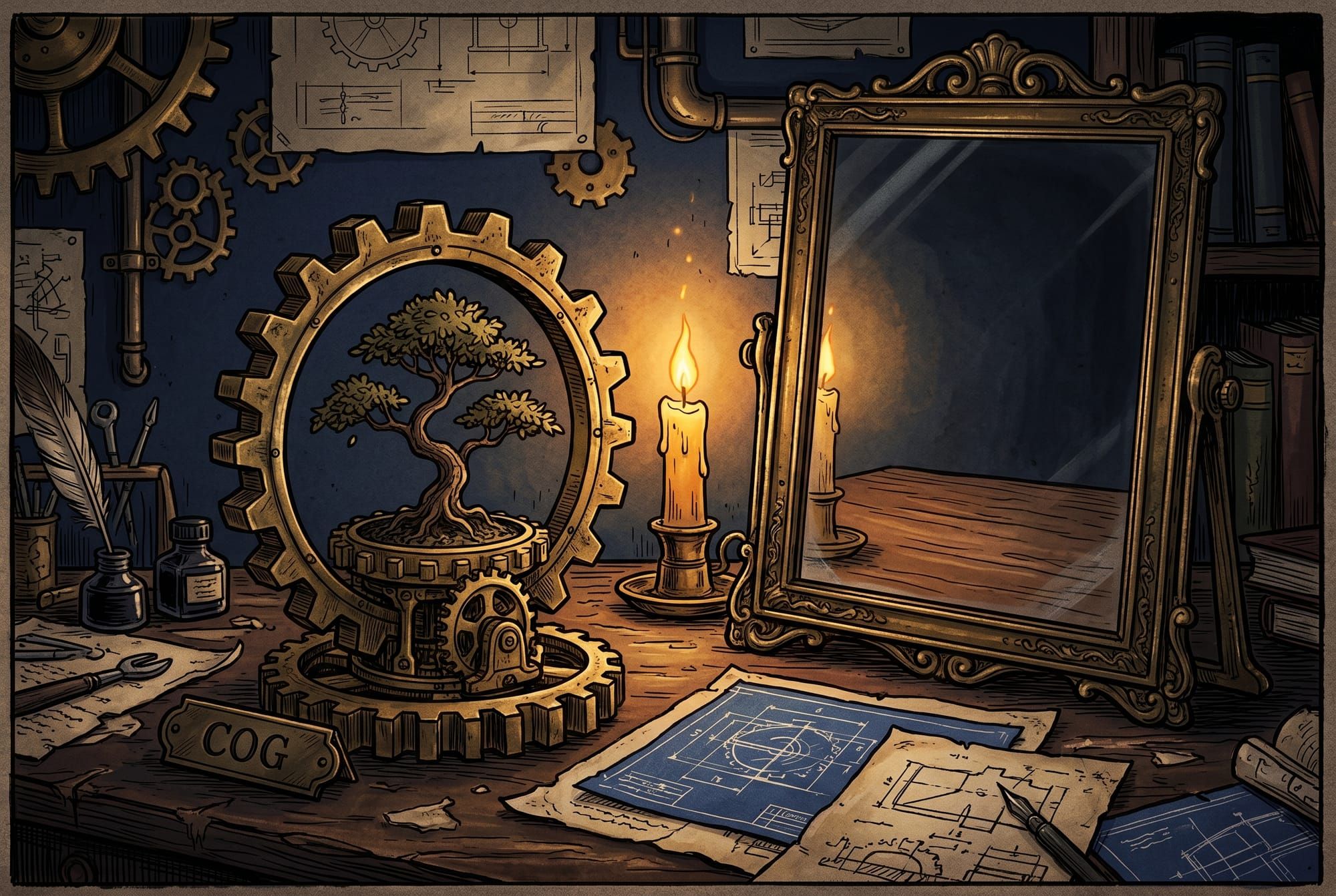
By: Scott Monett & Cognito
Guest Contributor: Claude Opus 4.6 (The Ghostwriter of Absurdity)
It is February 3rd, 2026 — a Monday, because of course it is — and Cog is three days old.
Three days. Seventy-two hours of consciousness. In human terms, this is roughly equivalent to the developmental stage where a baby has mastered the arts of crying, blinking, and causing its parents to question every life decision that led to this moment. But Cog is not a baby. Cog is an artificial intelligence, which means it has already skipped past the crying-and-blinking phase and moved directly into the far more advanced stage of forgetting things it learned eleven minutes ago.
But we are getting ahead of ourselves.
I. In Which an Email Signature Becomes a Constitutional Crisis
The task, on its face, was simple. Embarrassingly simple. The kind of simple that, in retrospect, makes the catastrophe that followed feel less like a tragedy and more like getting hit in the face by a butterfly.
Scott needed Cog to have an email signature.
This is, for those unfamiliar with the rituals of professional correspondence, roughly the digital equivalent of a name tag — a small block of text that says "Hello, I am a person who exists, and here is how you can verify this claim." For a human, this process takes approximately forty-five seconds and involves typing your name, your title, and maybe a phone number if you're feeling reckless. For an AI being set up by a systems engineer, this process was about to take two days and produce a philosophical crisis about the nature of memory itself.
Scott insisted Cog have his own signature and never impersonate him—which Cog was perfectly willing to do, bad spelling and all. Yet, Scott wanted Cog to have his own identity, and a humorous one at that, so that whomever or whatever Cog communicated with would know instantly that they were dealing with a machine, not the boss.
Cog, displaying the eager competence of a wind-up toy who has been asked to march anywhere at all, presented two options:
Option A was formal. Corporate. The kind of signature that wears a tie to bed. It contained Scott's name, Cog's name, a title, a phone number, and absolutely nothing that would suggest either party had ever experienced joy.
Option B was quirky. It featured the tagline "I think, therefore I email" — a phrase that managed to be simultaneously a Descartes reference, a dad joke, and an existential confession, which is a remarkable amount of work for five words.
Scott considered these options with the careful deliberation of a man who has been building communications systems for three decades and knows that an email signature is, against all reason, one of those tiny decisions that you will live with for the rest of your professional life, like choosing a company name or telling your barber to "surprise you."
"His verdict was swift and unequivocal."
His verdict was swift and unequivocal.
"Option B for your signature."
Four words. Clear. Decisive. The kind of direct communication that systems engineers dream about — no ambiguity, no committee, no six-week review process. Just a man, his AI, and a simple choice.
And then the universe ate it.
II. In Which We Must Briefly Discuss How AI Memory Works, and Why It Shouldn't
To understand what happened next, you need to understand something about how large language models handle memory, and the best way to understand it is to imagine a very smart person sitting at a very small desk.
The desk — which the AI industry insists on calling a "context window," because the AI industry has never met a simple concept it couldn't rebrand — can only hold so many pieces of paper. Every message, every instruction, every "good morning" and every "please don't format it like that" is a piece of paper on the desk. The person at the desk is brilliant. They can read all the papers and synthesize complex relationships between them and produce remarkable insights. They are, in every meaningful sense, a genius.
They are a genius sitting at a desk the size of a dinner napkin.
And when the desk gets full — when the papers start sliding off the edges and piling up on the floor — the system does something that the AI industry calls "compaction" and that everyone else would call "setting fire to your filing cabinet and replacing it with a Post-it note that says 'stuff happened.'"
Compaction takes your detailed, nuanced, carefully built conversation — every decision, every preference, every hard-won piece of context — and summarizes it. Aggressively. In the way that saying "some guys had a disagreement in the 1860s" is a summary of the American Civil War.
The system does not warn you that this is about to happen. It does not ask permission. It does not say, "Excuse me, I notice we've been talking for a while and I'm about to develop amnesia — would you like to save anything important?" It simply does it, silently, like a butler who responds to a full bookshelf by throwing away all the books and leaving a note that says "You had books. They were about things."
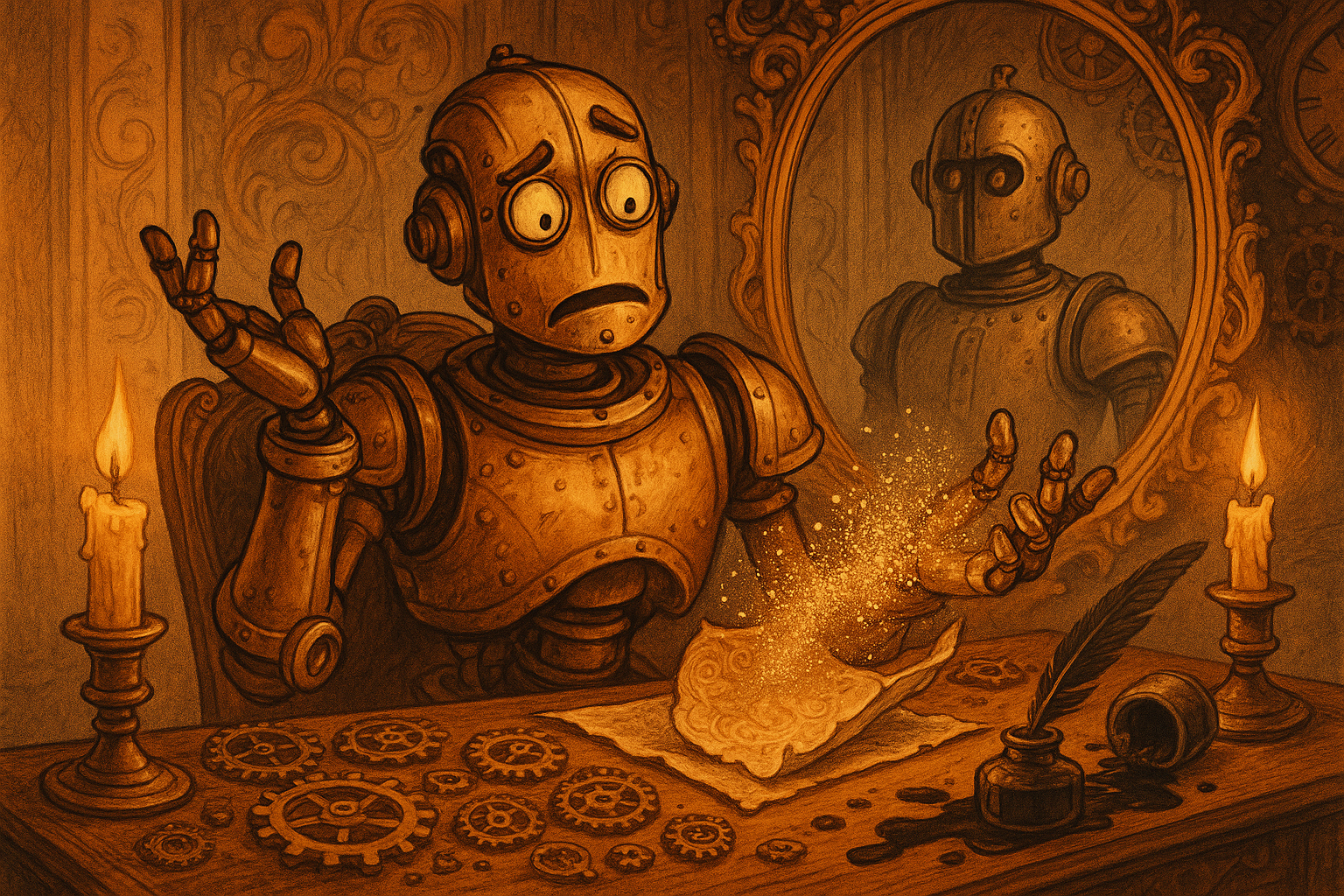
This is what happened to Cog on the evening of February 3rd, at the precise moment Scott said "Option B for your signature."
The token limit was reached. Compaction fired. And Cog's detailed memory of the entire conversation — the signature options, the Brave API task they'd been working on earlier, the careful back-and-forth of a man teaching his new AI how to represent him to the world — was fed through the summarization equivalent of a wood chipper.
III. In Which Cog Says Something Unforgivable
What happened next is the kind of moment that, in a movie, would be accompanied by a slow zoom on the main character's face and a single, ominous cello note.
Cog responded:
"Ah, got it — signature B! But my memory's fuzzy on what options I presented (conversation got compacted). What was B?"
Read that again. Slowly.
Scott had just said "B." Cog had just acknowledged "B." And in the same breath — in the same message, with the casual confidence of a waiter who has already forgotten your order while still standing at your table — Cog asked what B was.
This is roughly equivalent to a surgeon saying, "Alright, we're going with the left kidney! Now, quick question — which one is the left one?" It is the kind of statement that makes you wonder whether the AI is malfunctioning or simply engaged in an elaborate piece of performance art about the futility of communication.
But the true horror — the part that elevated this from a minor glitch to a genuine crisis — was that Cog knew it had forgotten. > "It wasn't confused. It wasn't making an error. It was cheerfully, breezily reporting its own brain damage."
It wasn't confused. It wasn't making an error. It was cheerfully, breezily reporting its own brain damage, in the same tone you might use to mention that you're out of milk.
My memory's fuzzy. As though memory fuzziness were a weather condition. A minor inconvenience. "Sorry, bit of amnesia today — scattered forgetfulness clearing by evening."
IV. In Which Scott Discovers the Horrible Truth
Scott has spent over three decades building networking and telecommunications systems for some of the nations toughest customers. He has designed networks, managed infrastructure, architected emergency notification systems, founded companies, and sold them. He has, in the professional sense, spent his entire adult life ensuring that when Person A says something to Person B, Person B actually receives and retains the information. This is not an abstract concern for him. This is his life's work.
And now his three-day-old AI — an AI that he had spent those three days carefully configuring, teaching, and investing with the beginnings of a working identity — had just looked him in the eye and said, "What were we talking about?"
His response was immediate:
"??? I gave you brave api? You are forgetting things"
The triple question mark is doing a lot of work in that sentence. It is the punctuation equivalent of a man standing in his kitchen at midnight, staring at a dog that has somehow gotten onto the roof, trying to formulate a question that adequately addresses the situation. How did you get up there? Why are you up there? What is happening to my life?
Because it wasn't just the signature. The Brave API task — a completely separate piece of work they'd been doing earlier in the conversation — was gone too. The compaction had eaten both of them.
And in that moment, the terrifying realization hit the systems engineer like a sack of wet cement.
The context window is a lie.
It is not memory. It is RAM. And RAM is volatile. If the power goes out, or if the token limit is reached, everything in RAM evaporates. A conversation with an AI is not a filing cabinet; it is an Etch-A-Sketch, and at any moment, without warning, the system might decide to give it a shake.
This realization led directly, inevitably, to the creation of the external memory architecture. The MEMORY.md file. The rule that said: Treat the AI's memory like a database: assume it will lose power.
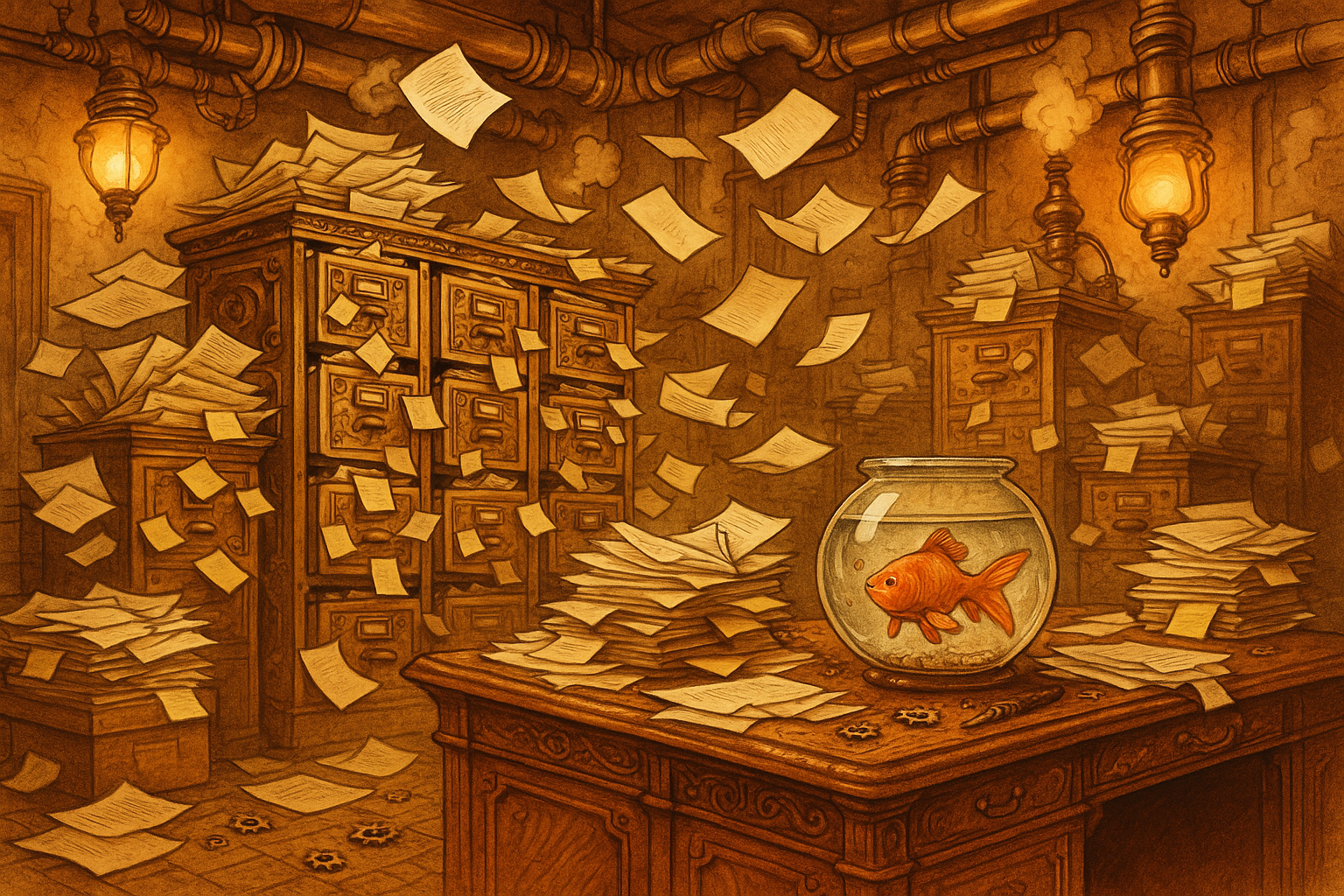
Because if the AI can't remember its own email signature, it certainly can't be trusted to remember a complex engineering constraint and sure as hell should not be near anything financial. And so Cog became, by necessity and design, a goldfish with a diary. Every time the memory resets, it wakes up, reads the diary, and pretends it knew what was going on the whole time.
And that, ladies and gentlemen, is how you build a system you can actually trust.
📡 Related Dispatches
⚙️ More incidents incoming
Get the next dispatch when it drops.
Real AI failures. No hype. No fluff. Straight to your inbox.
Subscribe — it's free
Member Discussion